In the old Irish year, winter didn’t creep in. It arrived on a single night.
Samhain, falling on 1 November, was the first day of winter. As the National Museum of Ireland explains, “as with many traditional festivals, it was the evening beforehand when most celebrating took place”. That evening, Oíche Shamhna (Samhain Eve), is the night we now call Halloween.
It was a turning point: the harvest in, the long dark months ahead. And for generations of country people, it was also a night when the line between this world and the next grew thin.
A night of returning souls
The museum records that Halloween “was also known as ghost night or spirit night and the souls of the dead were expected to return to the family home”. This wasn’t always a frightening idea. The dead were family, after all, and many households made them welcome.
But not every spirit abroad that night was a friendly one. Evil spirits were thought to be active, and “people avoided travelling alone on this night”. Fairy forts, mounds and lone trees were given a wide berth. According to Clodagh Doyle, Keeper of the National Folklife Collection, people who had to travel “often took with them a black-handle knife or a steel needle” for protection.
At home, holy water was sprinkled on the family, around the threshold and over the animals and the farm. Small crosses of wood or straw were made and hung over the door “to protect the home from bad luck for the coming year”.
Guisers, masks and mischief
If the spirits were roaming, so were the neighbours.
Bands of men or children went from house to house in disguise. These were the guisers, wearing masks and costumes to frighten the household, then providing some entertainment in return for a treat. The museum notes that the modern practice of trick-or-treating “stems from this tradition”. Some of these old Halloween masks are on display in the Samhain section of the National Museum of Ireland – Country Life in Co. Mayo.
It was a night for pranks too. Doyle lists knocking loudly on doors and running away, throwing cabbage heads at doors, and even dismantling a farm cart and rebuilding it inside someone’s house or through their farm gate.
Turnips before pumpkins
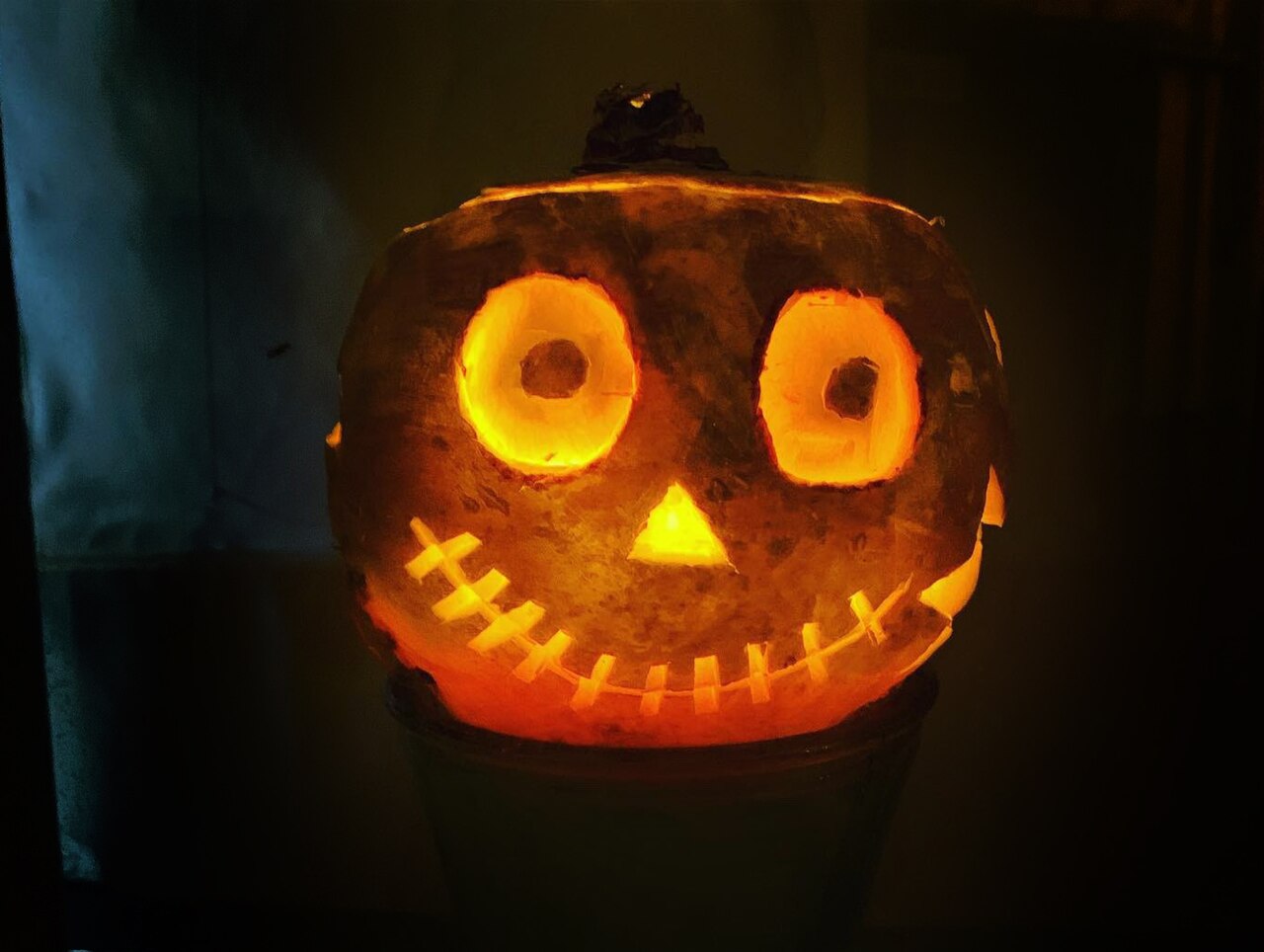
Before electricity, Doyle points out, “the countryside was a very dark place, adding to the scariness of the festival”. Candles were set in windows, and turnips were hollowed out and carved into lanterns with ghoulish faces, carried on the road or left glowing on the windowsill.
The pumpkin lantern so familiar today is, in the museum’s words, “an American development of this idea”. Anyone who has tried carving a raw turnip will understand why the switch caught on. The National Museum still keeps a carved “ghost turnip” in its folklife collection.
The púca and the blackberries
Children were told stories of the púca, a spirit of Irish folklore. On Samhain night, the story went, the púca went about spitting on the wild fruits. After that night the blackberries were spoiled and not to be eaten.
It’s a neat piece of folk wisdom. By the start of November, the last berries on the briars are usually past their best, and the story was a good way of keeping children from eating them.
Bonfires at the turning of the year
Fire has always belonged to Samhain. Bonfires were lit, the museum says, “to celebrate community identity, offer protection and mark the move into the season of darkness”. In the west of Ireland, the big bonfire night was traditionally St John’s Eve in midsummer, but the Halloween bonfire has become popular there too.
Tlachtga: “the birthplace of Halloween”?
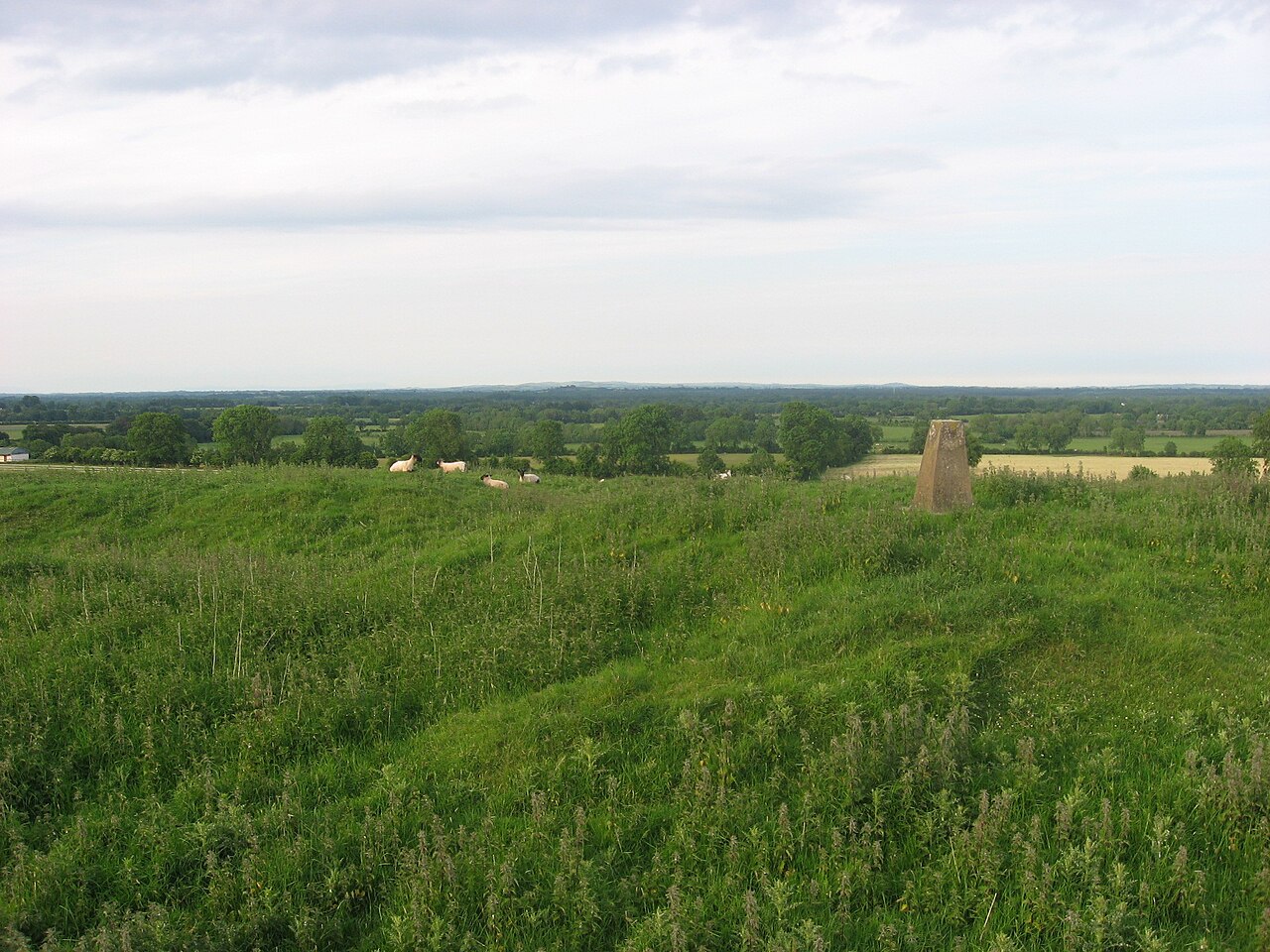
Ask where Samhain was celebrated in ancient times and you’ll often hear one answer: Tlachtga, the Hill of Ward, just east of Athboy in Co. Meath.
The hilltop is crowned by a 150-metre earthwork enclosure with four rings of banks. In early Irish tradition it was one of the great assembly places of the kingdom of Mide, alongside Tara and Uisneach. The Samhain connection comes from the 17th-century historian Geoffrey Keating. As quoted by University College Dublin’s Hill of Ward Project, Keating wrote that on the hill “the priests, augurs and druids of Ireland [would] assemble upon the eve of All Saints”. That account, UCD notes, “has led to Tlachtga being labelled as ‘the birthplace of Halloween'”.
Archaeology tells a long and complicated story of its own. Excavations in 2014 and 2015, directed by Caitríona Moore, suggested that the largest enclosure is probably late Bronze Age. Another enclosure was built around the 5th century AD, and burnt timbers from the Anglo-Norman period were found at the centre of the site. People have been coming back to this hill for a very long time.
From Samhain to Halloween
The name Halloween itself comes from the Christian calendar: “the evening before the Feast of All Saints (The Hallowed Ones)”, followed by All Souls’ Day on 2 November. Old and new beliefs sat side by side, as they so often did in rural Ireland.
What strikes you, reading through the folklore, is how much has survived. Clodagh Doyle calls Halloween “one of the few festivals of the calendar year that is still practiced in much the same way as it was for generations”. Disguise, food, games, pranks and fortune-telling are all still part of it. What has changed, she says, is that “less is homemade – supermarkets do the barmbrack, the costumes and the treats!”
So this Oíche Shamhna, if you carve a turnip instead of a pumpkin, leave a candle in the window, or tell the children why the blackberries are finished, you’re keeping a very old Irish new year.
On Thursday: barmbrack, colcannon and the fortune-telling Halloween table.
Have you a Samhain memory, a Halloween custom from your own parish, or a photograph of a carved turnip? Bog Magazine welcomes poetry, prose, short stories and photographs rooted in rural Ireland. Send your work to info@bogmagazine.com.
Sources
- National Museum of Ireland, “Traditions and customs of Halloween / Samhain”: https://www.museum.ie/en-ie/collections-research/folklife-collections/folklife-collections-list-(1)/religion-and-calendar-customs/hallowe-en-samhain
- National Museum of Ireland, “Ghost turnips, the púca, fortune-telling and evil abductions… how our ancestors inspire our Halloween celebrations today” (Clodagh Doyle, Keeper of the National Folklife Collection): https://www.museum.ie/en-IE/News/2023/Ghost-turnips,-pucas,-fortune-telling-and-evil-abd
- National Museum of Ireland, “Ghost turnip” (collection object): https://www.museum.ie/en-IE/Collections-Research/Collection/Top-things-to-see-in-the-Irish-Folklife-Collection/Artefact/Ghost-turnip/b202e8ea-0728-4b3d-b0f1-82660fe45ce9
- UCD School of Archaeology, “The Hill of Ward Project” (Dr Steve Davis): https://www.ucd.ie/archaeology/research/how/
Featured image: Photo: Culture Vannin, via Wikimedia Commons (CC0), source.